
Hearing Test for Senior Citizens
What to expect at the first appointment
“Let’s get your hearing checked.”
For some families, that suggestion starts a difficult conversation. A parent may say their hearing is fine. They might worry about being told to wear a hearing aid, or feel uncomfortable about needing help with something they have managed independently for years.
A little information can make the first visit feel less daunting. A hearing test for senior citizens helps establish how well they hear, what may have changed and which next steps are appropriate. There is time to understand the results before making decisions about treatment or devices.
Is it just an age thing
Hearing can change as we grow older. Because age-related hearing loss often develops gradually, people may adjust their routines without realising how much effort listening now takes.
Someone might choose the quietest seat at a family gathering. Another person may leave phone calls to their spouse. These small changes can hide a difficulty for quite some time.
Age is one possible explanation, but it should not be assumed to be the only one. An assessment helps establish the type and extent of hearing loss. Medical evaluation can also identify problems such as earwax blockage or an ear condition that needs treatment.
What happens during the appointment
The audiologist usually begins by asking about your hearing and medical history. When did you first notice a change? Does one ear seem different? Are phone calls harder than conversations at home?
You do not need medical terms to explain the problem. “I miss what my granddaughter says on video calls” is a useful example. So is “I can follow one person, but I lose track when everyone joins in.”
Your ears may be examined before testing. Depending on your symptoms, the assessment may include the following tests.
Listening to tones
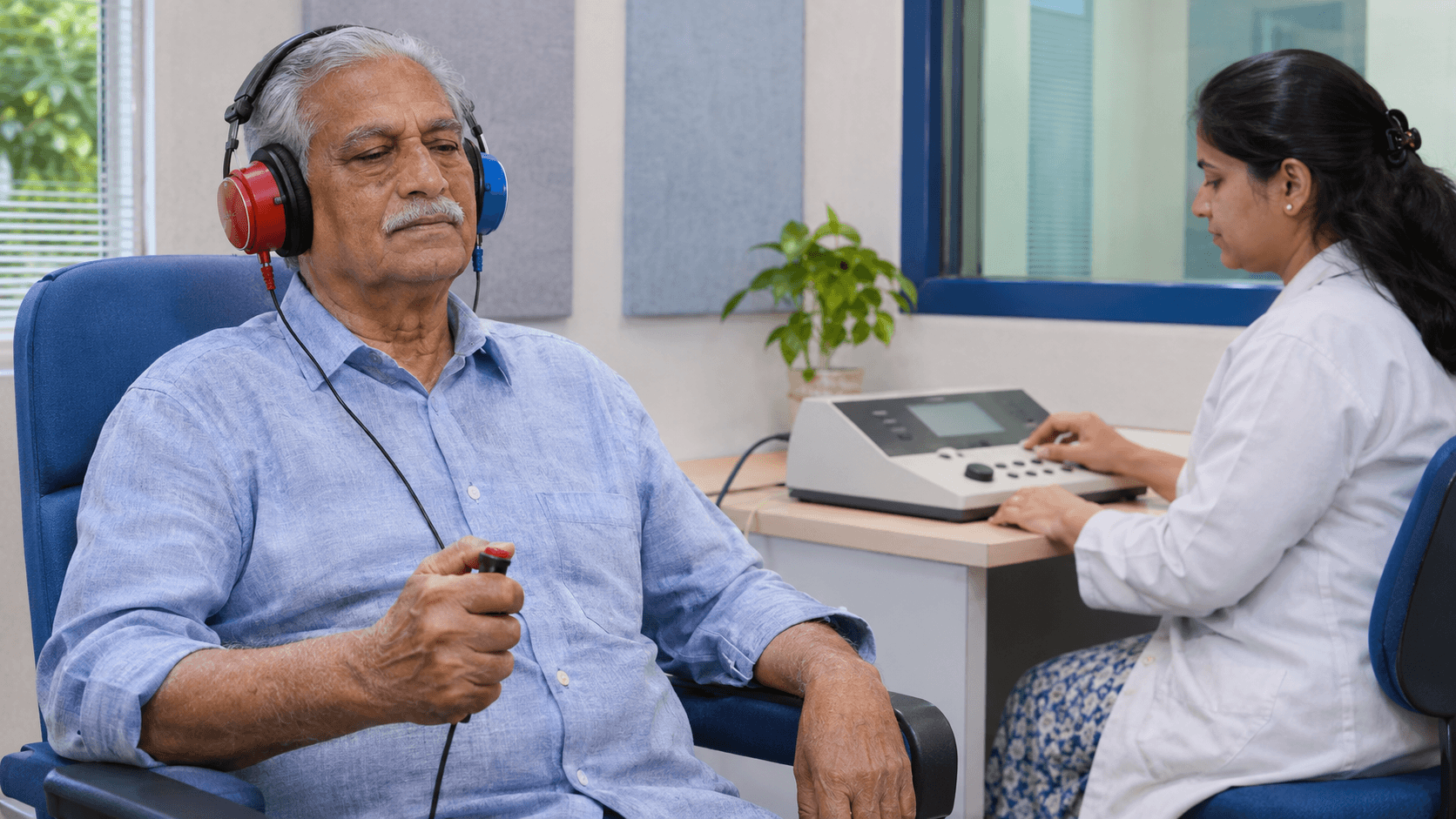
You wear headphones and listen for sounds at different pitches and volumes. Each time you hear a sound, you respond as instructed, usually by pressing a button or raising your hand. Some sounds become very faint. You are not expected to hear them all.
Listening to speech
You may be asked to repeat words. This gives information about speech understanding as well as the ability to detect sound. Mention if conversations are mainly difficult in noisy places, so the audiologist can decide whether additional testing would help.
Checking the middle ear
A test called tympanometry may be used to check how the eardrum moves. Not everyone needs the same tests; the selection depends on the clinical findings.
Will the hearing test hurt
The usual headphone hearing test is painless. There is nothing to memorise and no need to practise beforehand. If you do not understand an instruction, ask for it to be explained again.
A typical audiology assessment takes around 30 minutes to an hour, although the length depends on the tests required. Ask about the expected duration when booking, especially if travel or sitting for long periods is difficult.
A few things to bring along
Bring previous hearing reports, a list of current medicines and any hearing aids you already use. A short note on the situations you find difficult can help you remember what you wanted to discuss.
If you prefer speaking in Hindi or another language, mention this when arranging the appointment. You can also ask about stairs, lift access and assistance reaching the testing room.
A relative can accompany you if you would find that reassuring. Choose someone who will help you remember the discussion while giving you space to speak for yourself.
Understanding your hearing report
Results are commonly recorded on a graph called an audiogram. It shows the quietest sounds you can hear at different pitches in each ear. Ask the audiologist to explain the findings in everyday language and relate them to the concerns you brought to the appointment.
Before leaving, you should understand whether further medical review is needed, what support is being suggested and when your hearing should be checked again. Request a copy of the report for your records.
Does getting tested mean buying hearing aids
The recommendation depends on the findings. Some people need medical care for an underlying ear problem. Others may benefit from hearing aids, listening support or advice on communication.
Where hearing aids are appropriate, they can make sounds more accessible, but they do not restore perfect hearing. Explain what you hope to do more comfortably: follow a conversation on an evening walk, hear a religious service or speak to family on the phone.
If a device is recommended, ask to see how it is handled. Can you put it on comfortably? Can you manage its controls, charging or batteries? Ask about fitting, follow-up visits and the total cost before deciding.
Helping a parent feel comfortable about a test
“You never hear anything” is unlikely to encourage someone to book an appointment. Try referring to a shared experience instead: “You said yesterday’s phone call was difficult. Shall we find out what might help?”
Ask what concerns them about the visit. It may be cost, travel or the fear of being pressured into a purchase. Once the concern is clear, you can ask the clinic a practical question before booking.
During the consultation, let your parent describe their experience first. Add your observations when invited. Afterwards, check whether they would like anything explained again.
When to arrange another check
The World Health Organization advises yearly hearing checks for older adults. If you already have hearing loss, ask your clinician about a review schedule suited to your needs. Arrange an earlier assessment if you notice a change rather than waiting for the next planned visit.
When hearing changes need urgent attention
A sudden drop in hearing in one or both ears needs urgent medical assessment. Hearing that worsens over days or weeks, or hearing loss with ear pain or discharge, also needs prompt medical attention. Do not assume it is ageing or wait for a routine hearing-aid appointment.
Finding a comfortable place to start
When choosing a clinic, ask whether the appointment includes an explanation of the results and guidance on the next steps. It is reasonable to ask about assessment fees before visiting.
For families exploring local care, Spectra Plus offers hearing assessment and rehabilitation, including audiological evaluation and hearing-aid guidance. You can describe your concerns when enquiring and ask which appointment would be suitable.
The first visit does not have to settle every question. Start with the one that brought you there: “Why has listening become harder for me?”